01
The enquiry arrives
A client sends us the project information, drawings and Site Investigation. We establish what the development needs and where stabilisation could provide the greatest value.
Enquiry • Drawings • Programme
Ground stabilisation and soil improvement using lime and cement are long-established, tried and tested techniques in the UK.
These techniques provide cost-effective, high-performance capping layers for highways, piling platforms, temporary haul roads and compounds.
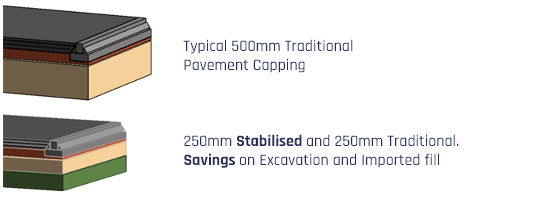
By using in-situ soils to create capping layers, stabilisation can reduce excavation, disposal and the volume of imported aggregates required on site.
JJMac Ground Engineers and Consultants undertake testing and analysis of existing subsoils. Our soil engineers and design consultants then develop the optimum design and methodology to achieve the required performance specification.


See our teams, specialist plant and material-reuse techniques working together on live projects.

Every project starts with the ground. We understand what is there, determine how it can be improved and turn weak or unsuitable material into something the next stage of construction can rely on.
Explore the complete processA client sends us the project information, drawings and Site Investigation. We establish what the development needs and where stabilisation could provide the greatest value.
Enquiry • Drawings • Programme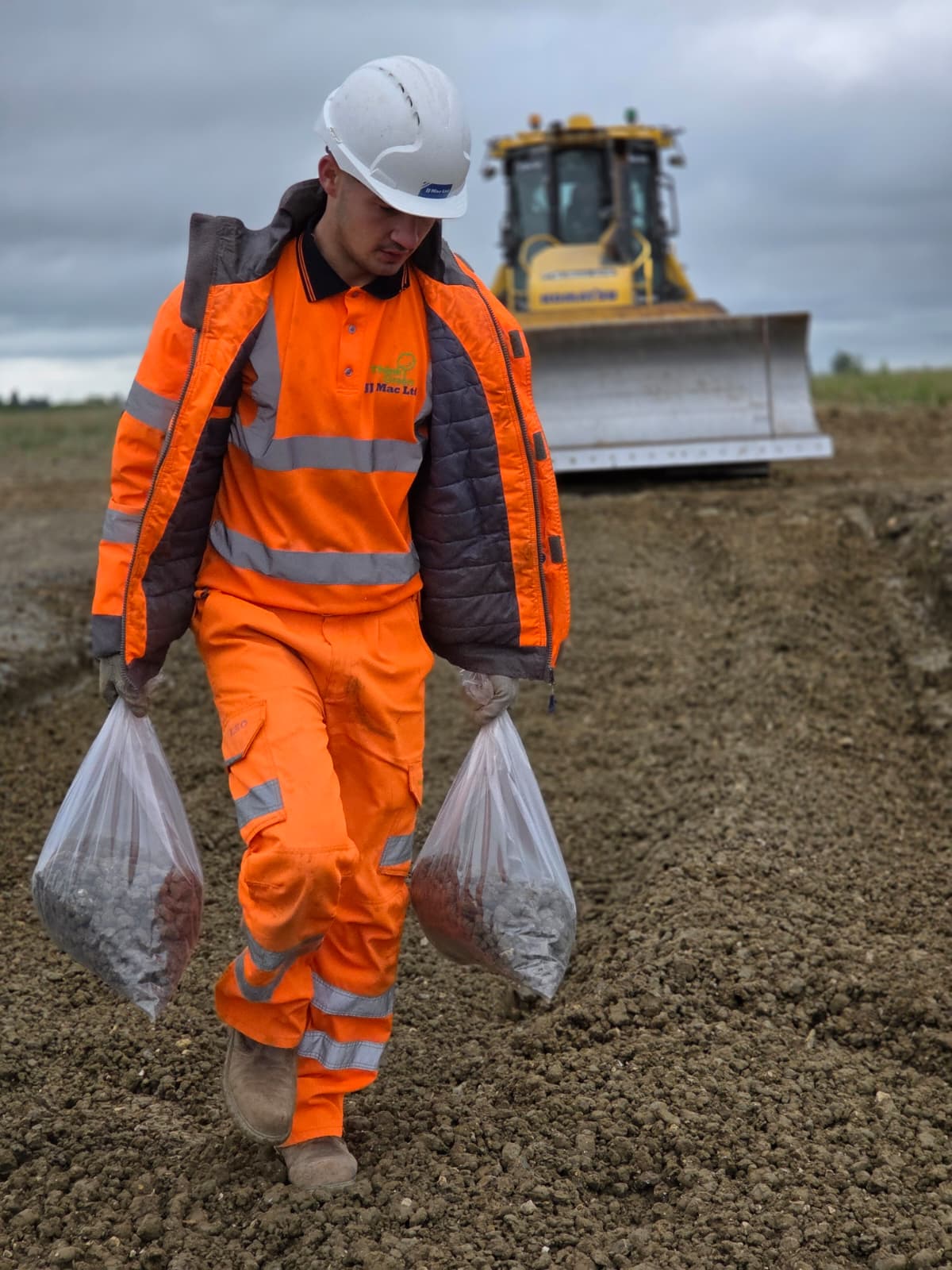
Our team reviews soil type, moisture, CBR, groundwater, sulphates and required performance. Where necessary, samples are tested to confirm how the material will respond to treatment.
Site Investigation • Testing • Ground ConditionsThe treatment depth, binder type and target performance are selected for each area. We also look for opportunities to reduce excavation, muck-away and imported aggregates.
Design • Value Engineering • Build-up
We prepare the methodology, quotation and programme, clearly setting out what will be treated and how. Once agreed, the project is handed from estimating to the operational team.
Proposal • Agreement • Pre-start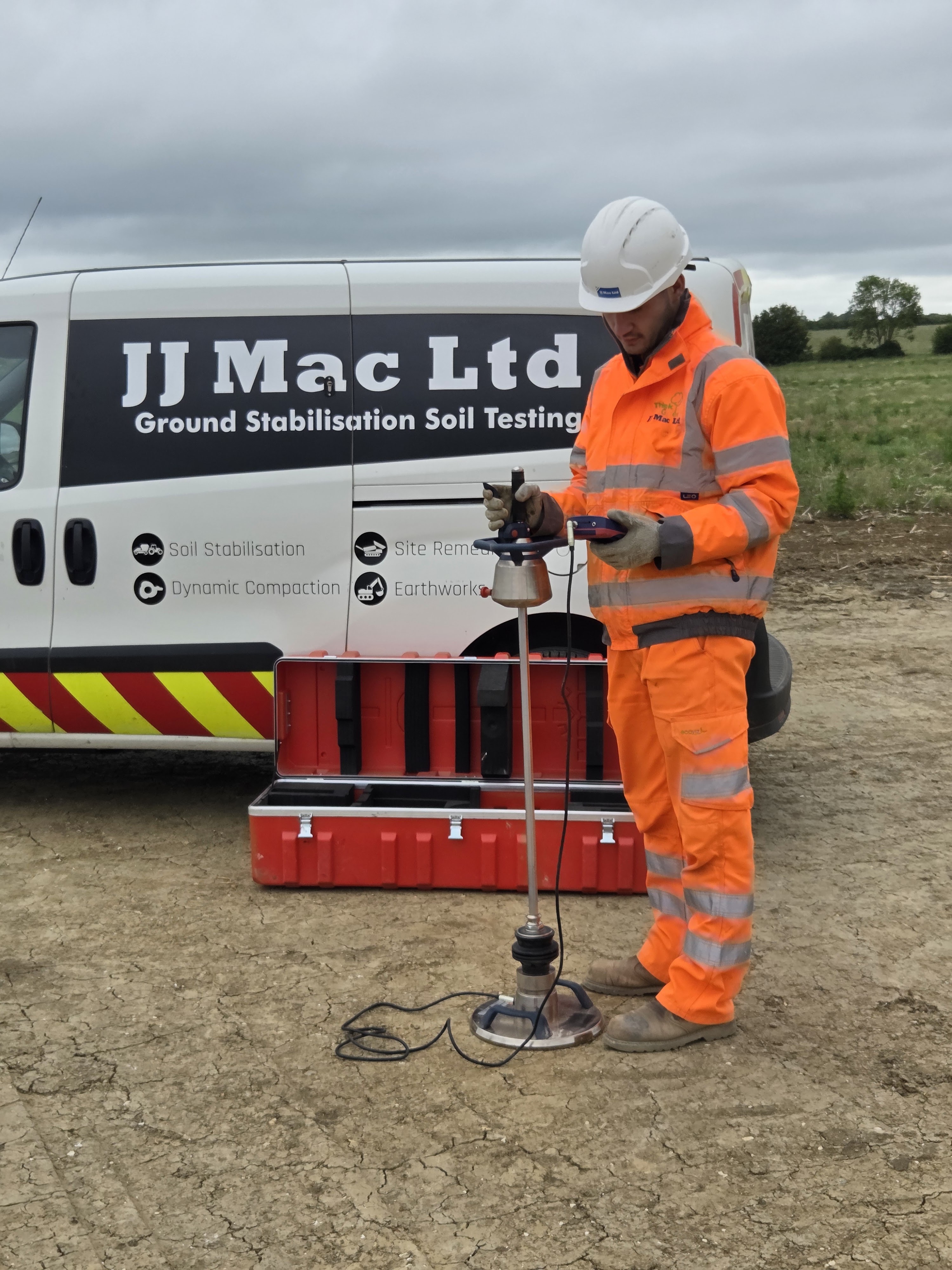
On site, treatment areas and levels are confirmed before material is placed in suitable layers. Wet or difficult soils can be conditioned before the final stabilisation process begins.
Preparation • Levels • Moisture Conditioning
The specified lime, cement or blended binder is applied evenly at the required rate. Quantities, delivery records and treated areas form part of the project quality record.
Lime • Cement • Controlled Application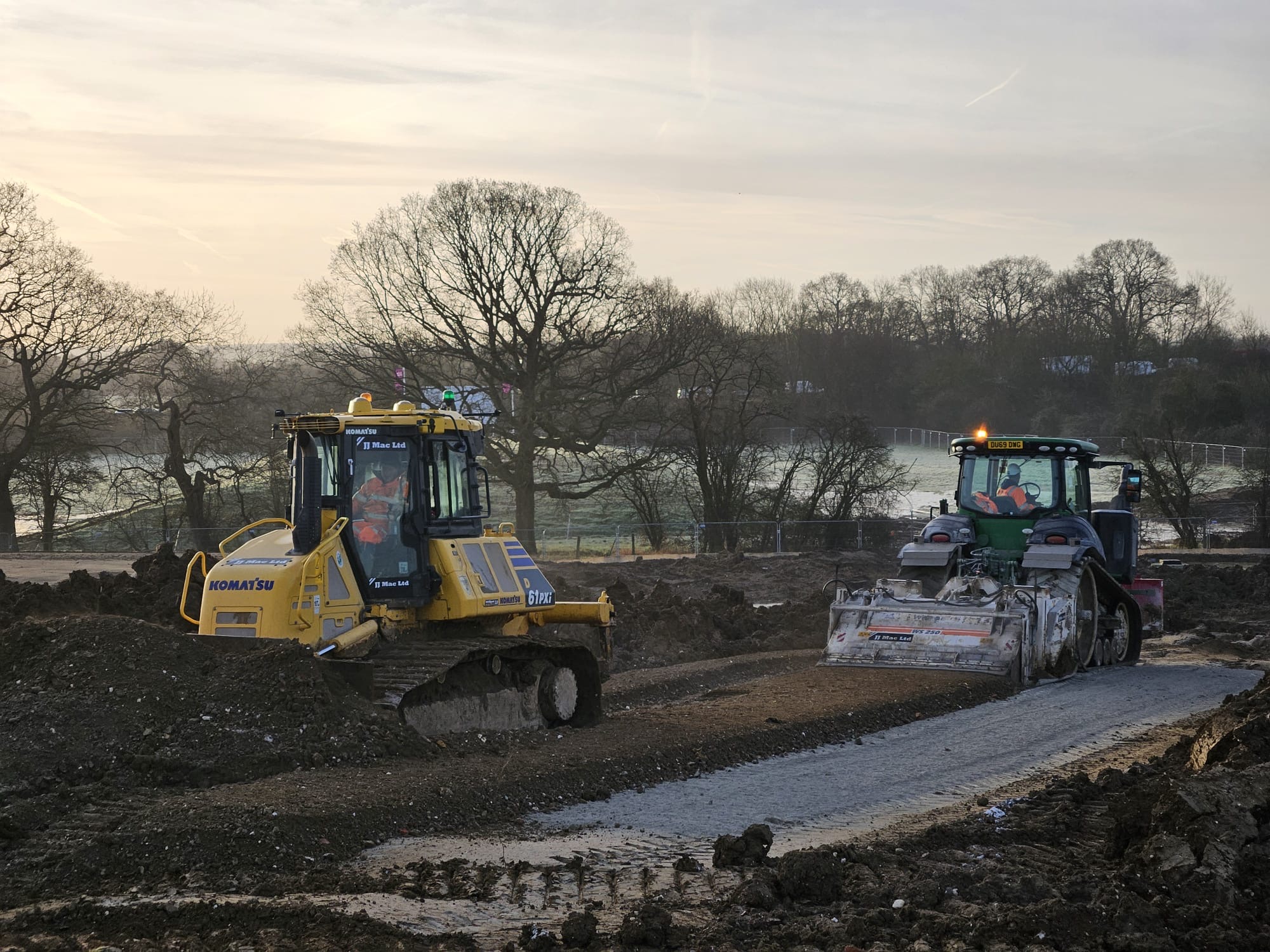
The stabiliser blends the binder through the full treatment depth before rollers compact the layer. The surface is then trimmed to the required levels, falls and tolerances.
Mixing • Compaction • GPS Grading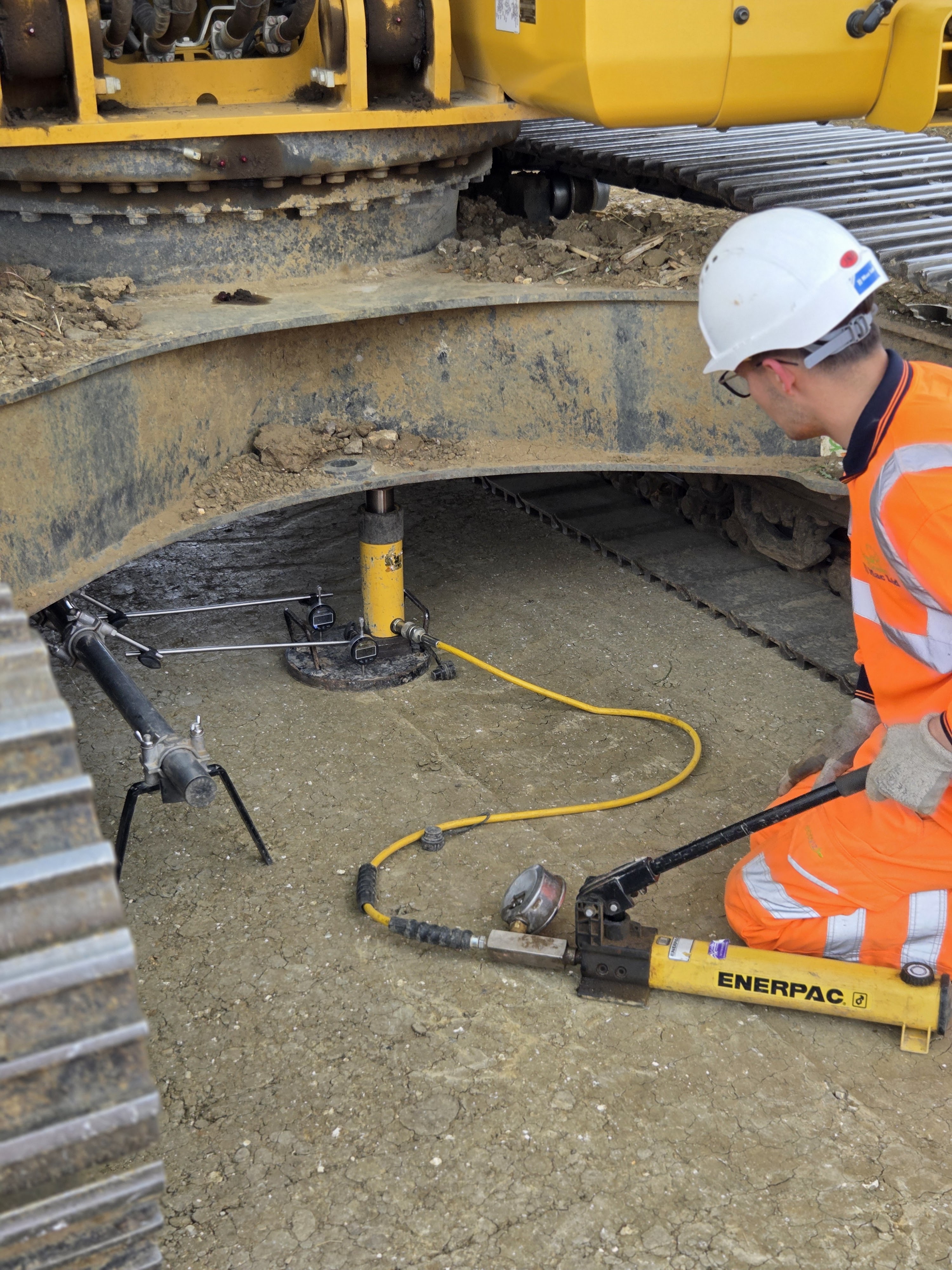
Testing verifies that the treated ground meets the project specification. Any local weakness is investigated, remediated and retested before the area is released.
CBR • Plate Load • Density • QA
Final levels, treatment areas, test locations, binder records and photographs are brought together into the project QA package.
As-built • Test Results • TraceabilityThe finished platform and supporting documentation are formally handed to the client. The result is a verified construction surface ready for the next phase of the development.
Completion • QA Pack • HandoverEvery stage has a clear purpose, from understanding the site through to verified handover.
Established treatment methods that improve difficult soils and help retain suitable site-won material within the construction programme.
Soil treatment has been used for road and airport construction in the UK since the 1970s. JJMac would like to share practical information and knowledge about soil treatment and ground improvement.
Soil treatment using lime and cement is used widely in road and pavement construction around the world. Other applications include:
Soil treatment binders improve unsuitable soils that are soft and wet, with low shear strength and bearing capacity. Once treated, these soils can be suitable for use as sub-base material for road and pavement construction, allowing material to remain on site instead of being transported to disposal facilities.
Explore JJMac technical information covering design, performance and environmental considerations.


 Car Distribution Centre
 Hauliers Depot
Storage Depot
Hauliers Depot
Storage Depot
 Car Park & Access Road
 Temporary Hauls Roads
 Stockpile Material Treatment
 Remediation and Stabilisation
Treating Stockpile of 6E material
Sustainability Report
Remediation and Stabilisation
Treating Stockpile of 6E material
Sustainability Report












EXPLORE JJMAC