Extensive knowledge, professional equipment and experience
ROLLING DYNAMIC COMPACTION
RDC
The application of Rolling Dynamic Compaction (RDC) on former landfill and backfilled sites has increased across the UK in recent years. There is an increasing need for civil engineers to provide cost‑effective solutions for construction on marginal or difficult sites.
JJMac RDC reduces settlement and compression risks on poorly compacted backfill when redeveloping sites, improving bearing capacity and programme certainty.
Compaction is a common ground‑improvement technique that increases soil density by applying mechanical energy, which raises soil strength and reduces settlement beneath the ground surface.
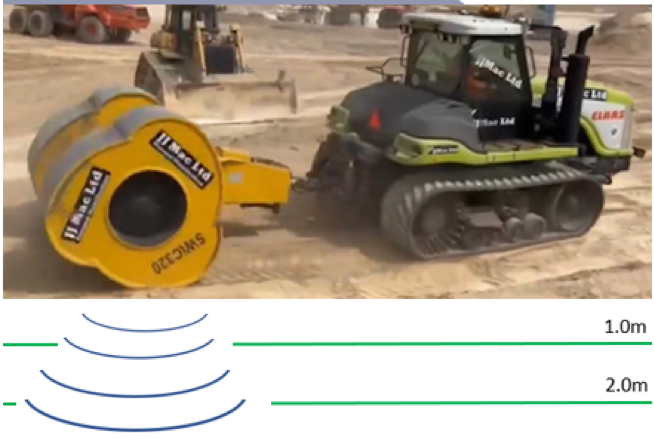
RDC involves towing a non‑circular roller with a tractor. As the non‑circular roller rotates, it imparts energy to the soil as it falls to impact the ground.
HEIC — High‑Energy Impact Compaction HIEDC — High Impact Energy Dynamic Compaction
These are alternative names used globally by different contractors for RDC.
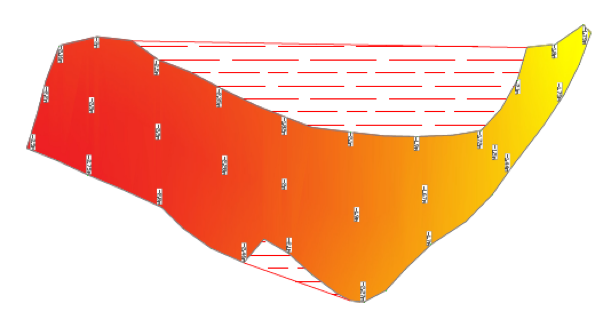
Level Changes via Heat Map
Compared with circular drum rollers, RDC can compact thicker layers due to a greater depth of influence beneath the ground surface. This is driven by roller shape, mass and ground speed (typically 9–12 km/h).
Depth of Dynamic Compaction Influence
The depth of influence of RDC is quantified by comparing in‑situ test results before and after compaction. JJMac carries out a topographical survey of the area before works begin and repeats it on completion; the two datasets are compared to validate compaction results.
Why Choose JJMac for RDC, HEIC & HIEDC in the UK?
Specialist ground improvement contractor with nationwide coverage.
Deeper, faster soil densification for roads, railways and industrial platforms.
Validated outcomes using surveys, in‑situ testing and QA documentation.
Compliance with UK health, safety and environmental standards.
RDC / HEIC / HIEDC — Frequently Asked Questions
What projects benefit most from Rolling Dynamic Compaction?
Landfill redevelopment, backfilled sites, large industrial slabs, logistics yards and transport infrastructure where deeper influence and productivity reduce programme duration.
How does RDC compare to conventional rollers?
RDC delivers greater energy per impact and a deeper influence zone, enabling thicker lift compaction and fewer passes than circular drum rollers in suitable soils.
Is RDC suitable for all soil types?
RDC is most effective in granular or mixed fills; cohesive clays may require pre‑treatment. We assess each site through trials and testing.
What evidence of performance do you provide?
Pre‑ and post‑works topographical surveys, in‑situ density/strength measurements and a completion report with test results and as‑built data.
We use basic cookies to provide services. By using our website, you consent to the use of cookies on this device. You can change your browser settings at any time. See cookie policy.