

Working towards Net Zero
How much carbon can a temporary haul road save when we treat the soil on site and recover it at the end of the works?
See the 1 km road comparison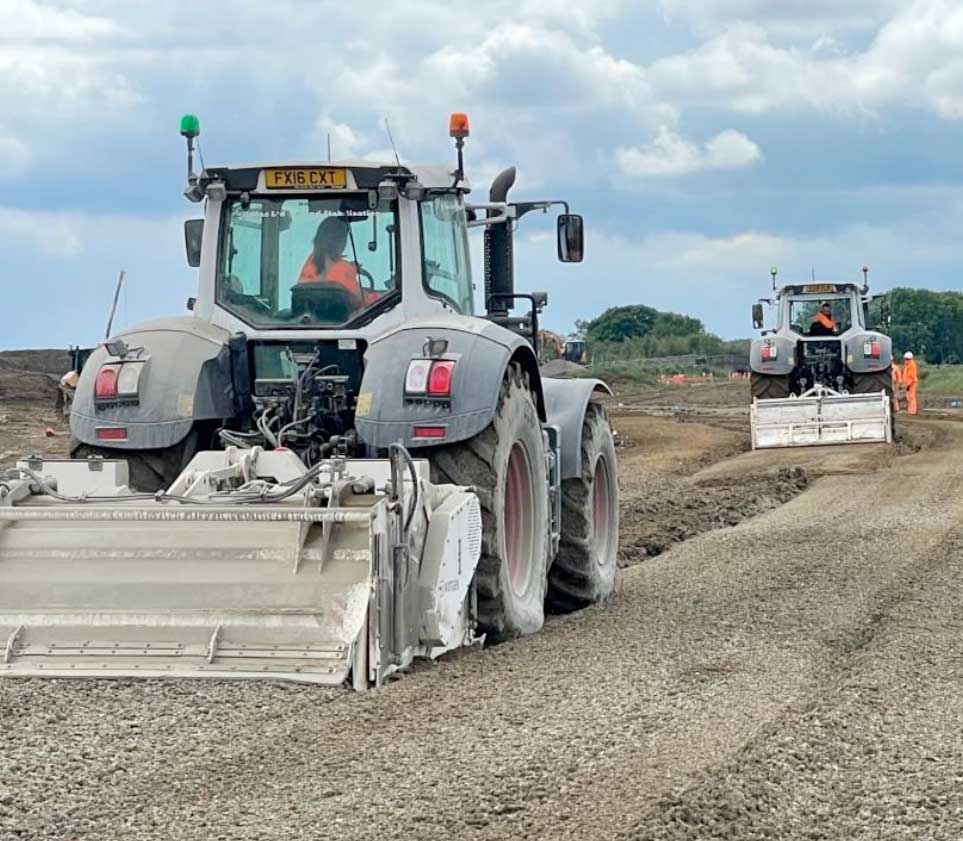
Building with the soil on site
We test the existing soil to see whether it can carry the required loads once treated. Where the ground is suitable, stabilisation can reduce the amount of stone brought in and the volume of excavated soil taken away. That means fewer lorry journeys during construction.
Carbon comparison for a 1 km haul road
JJMac modelled two ways to build and remove the same road. One uses 500 mm of imported stone. The other uses treated site soil with a 100 mm stone surface. With 1% cement and electric plant for removal, estimated emissions fall from 109.5 to 53.5 tonnes of CO₂e.
| Road option | Construction | Decommissioning | Whole-life total |
|---|---|---|---|
| Traditional imported-stone road | 77.0 tCO₂e | 32.6 tCO₂e | 109.5 tCO₂e |
| Stabilised road, diesel removal | 46.7 tCO₂e | 14.5 tCO₂e | 61.2 tCO₂e |
| Stabilised road, electric removal | 46.7 tCO₂e | 6.8 tCO₂e | 53.5 tCO₂e |
Design and carbon assumptions
The road is 6 m wide. The stabilised design treats 300 mm of soil with cement measured by dry soil mass. The model allows 30 km each way to the quarry or disposal site and 1,550 kWh for electric removal.
At 1.5% cement, the estimated saving with electric removal falls to 39.7%. At 2% it falls to 28.4%. The binder dose for each site depends on the soil tests and the strength the road needs.
The traditional design uses aggregate at 2.1 t/m³ and 3,000 litres of diesel for construction. Quarry supply accounts for 49.2 of its 77.0 tCO₂e construction total, inbound transport for 18.2 and plant for 9.6. The stabilised design treats 3,060 t of dry soil at 1.7 t/m³.
Traditional road thickness also affects the comparison. Against a 300 mm stone road, the modelled saving is 26.4%. Against a 600 mm road, it is 58.2%. Both figures use the same 1% cement design with a stone surface and electric removal.
The 100 mm surface adds 21.9 tCO₂e across quarry supply, delivery, placement, removal, export and recycling. With that surface, switching from diesel to electric removal reduces decommissioning emissions by 53.1%. Totals are rounded.
Alternative design without a stone surface
JJMac also assessed a road treated with 2% cement and no imported stone surface. Against the same 500 mm traditional road, this design avoids 6,300 t of aggregate and an estimated 628 loaded HGV movements over construction and removal.
Construction accounts for 56.3 tCO₂e. Diesel decommissioning adds 8.0 tCO₂e, bringing the total to 64.3. Electric decommissioning adds 0.3 tCO₂e, bringing it to 56.6. The electric option saves 48.4% against the traditional road.
For this unsurfaced design, each additional 0.5 percentage points of cement adds about 12.5 tCO₂e. Laboratory mix design and field testing determine which dose meets the required strength and durability.
Restoring the ground after use
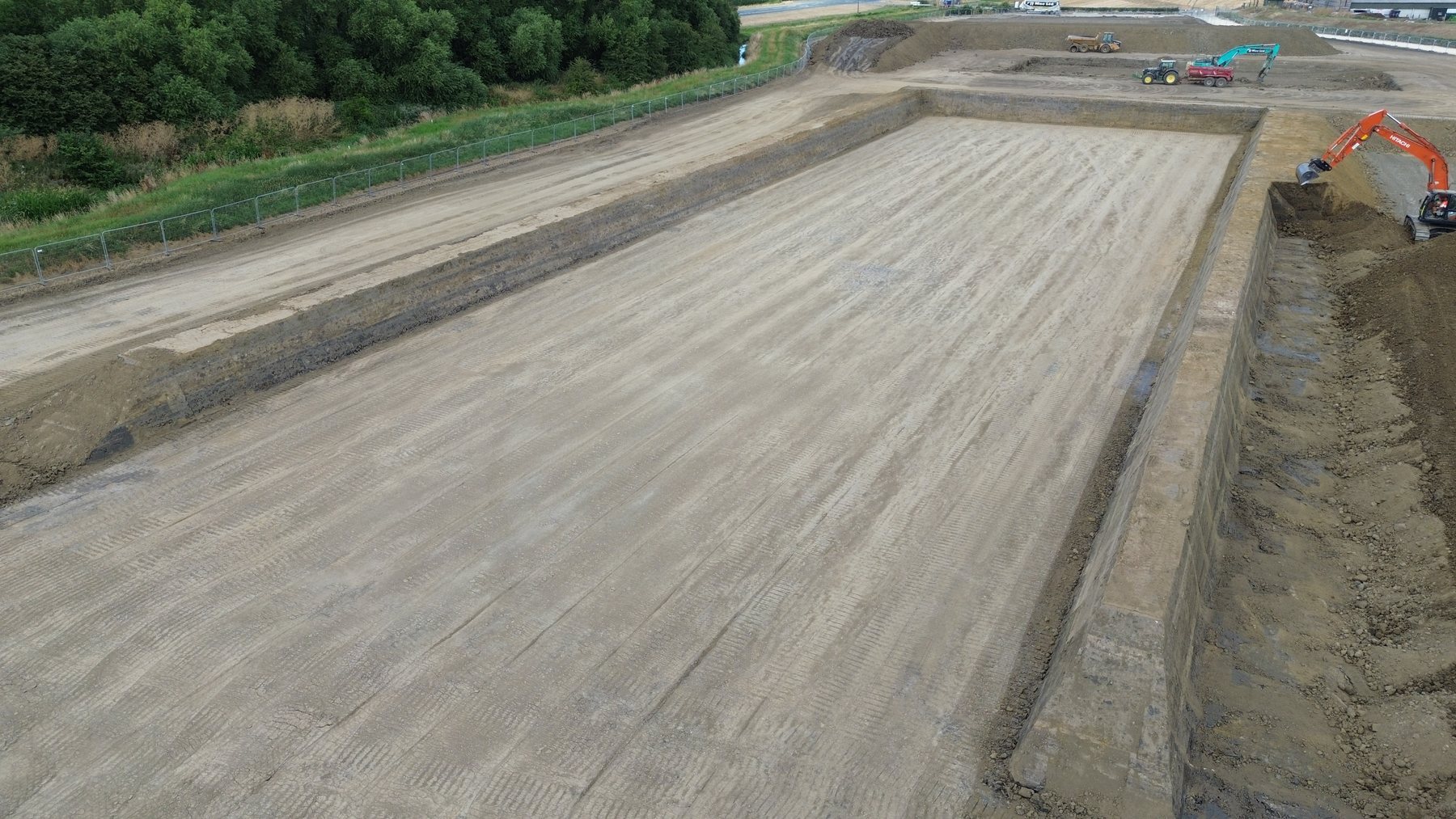
Before construction, we record levels, soil structure, pH, composition and moisture. Laboratory results help us choose a binder and agree what condition the ground should be returned to.
JJMac’s strategy proposes electric ATVs to map the road before removal. Electric tractors would then loosen the treated layer so it can be separated, reprocessed or blended with suitable site soils. The choice depends on the binder and the intended land use.
The plan includes reinstating topsoil and reseeding with the agreed vegetation or wildflower mix. Follow-up tests compare the restored soil with the baseline. The strategy also considers renewable power for the plant. The carbon model above uses location-based electricity emissions.
Haul road decommissioning